Bringing Clarity and Coordination to Scheduling Across Devices
Cut Errors by 25% and 40% Caregiver Satisfaction Increase
Miro
DoveTail
3 Stakeholders
1 UX Researcher
1 Product Manager
Prototyping
Interaction Design
User Research
Design Systems
Coordinating Care Seamlessly
Redesigning a real-time scheduling system for a national childcare platform.
- Led the redesign of a scheduling system used by thousands of caregivers, teachers, and admins
Business Problem
Scheduling was fragmented and error-prone.
- Manual updates and offline workflows
- Late or missed arrivals due to unclear timing
- Admins intervened frequently to resolve mix-ups
- Poor visibility across roles and platforms
Our Goal
Design a centralized, role-aware scheduling system that works across devices.
- Enable real-time, synced updates for all users
- Tailor the experience to the unique needs of caregivers, teachers, and admins
- Reduce late or missed hand-offs
- Cut down on admin workload and stress
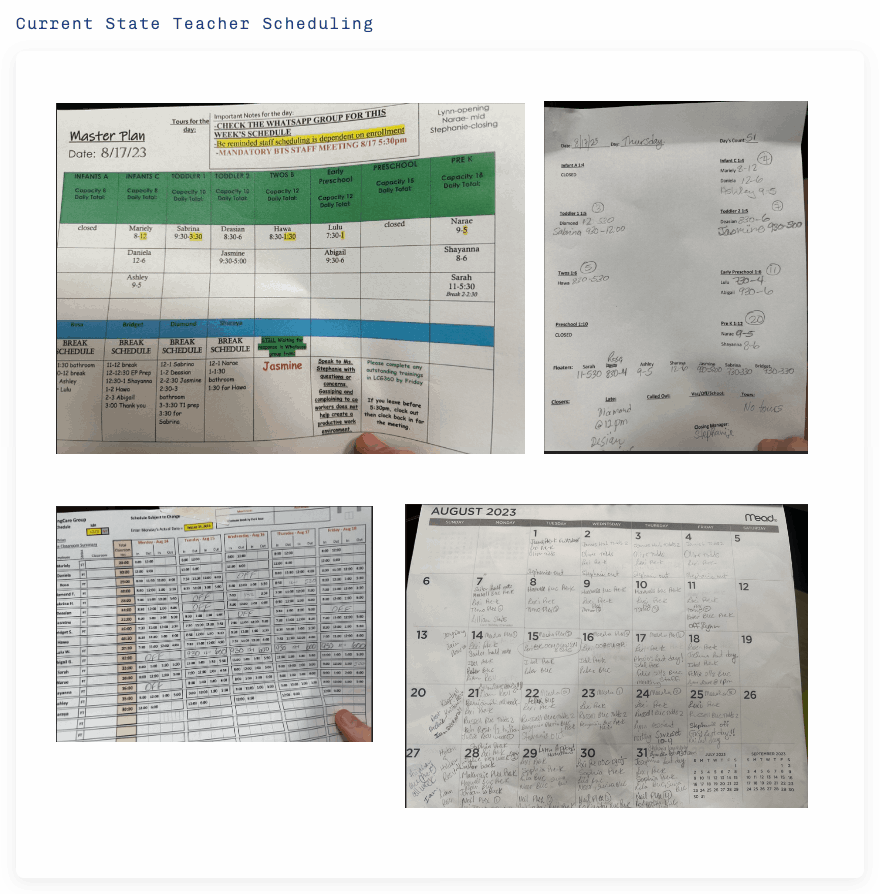
Primary Users & Pain Points
- Juggle multiple schedules and locations
- Need flexibility to update on the go
- Track incoming children by classroom
- Often unaware of changes until too late
- Manage the entire center’s logistics
- Constantly intervene to resolve issues
- No real-time visibility
- High volume of last-minute changes
- Confusing or missing updates
Why It Matters
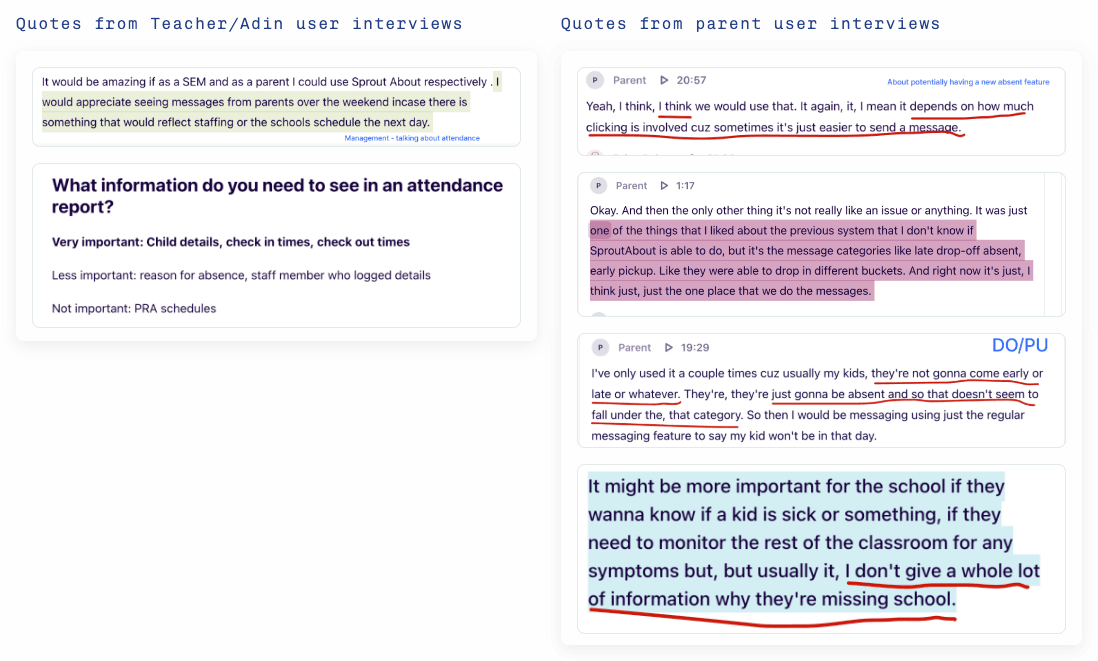
In childcare, small lapses in clarity have high stakes
Real World Example
- A teacher once called a caregiver about a no-show, only to find the child still in their car
- The caregiver thought the drop-off had already happened
- The child was safe, but the moment highlighted the urgent need for better communication and coordination
The Solution
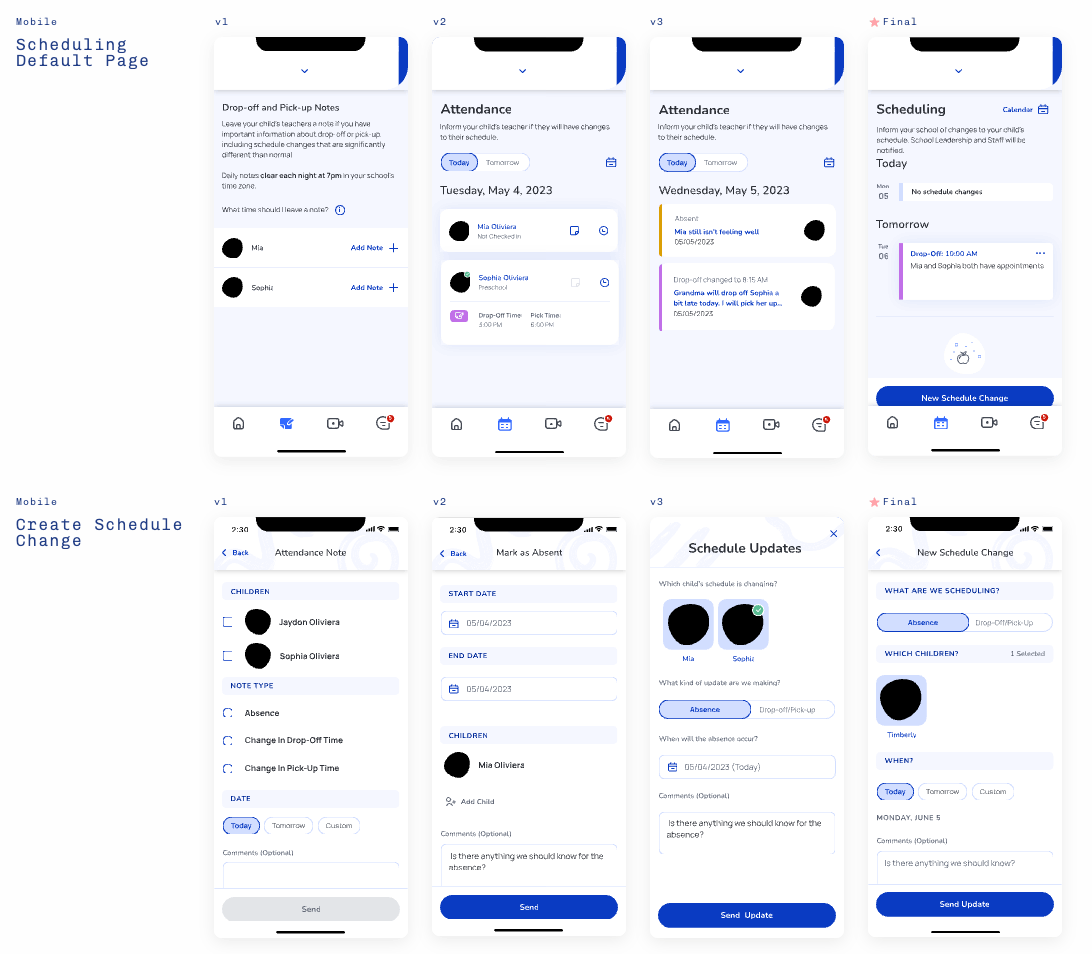
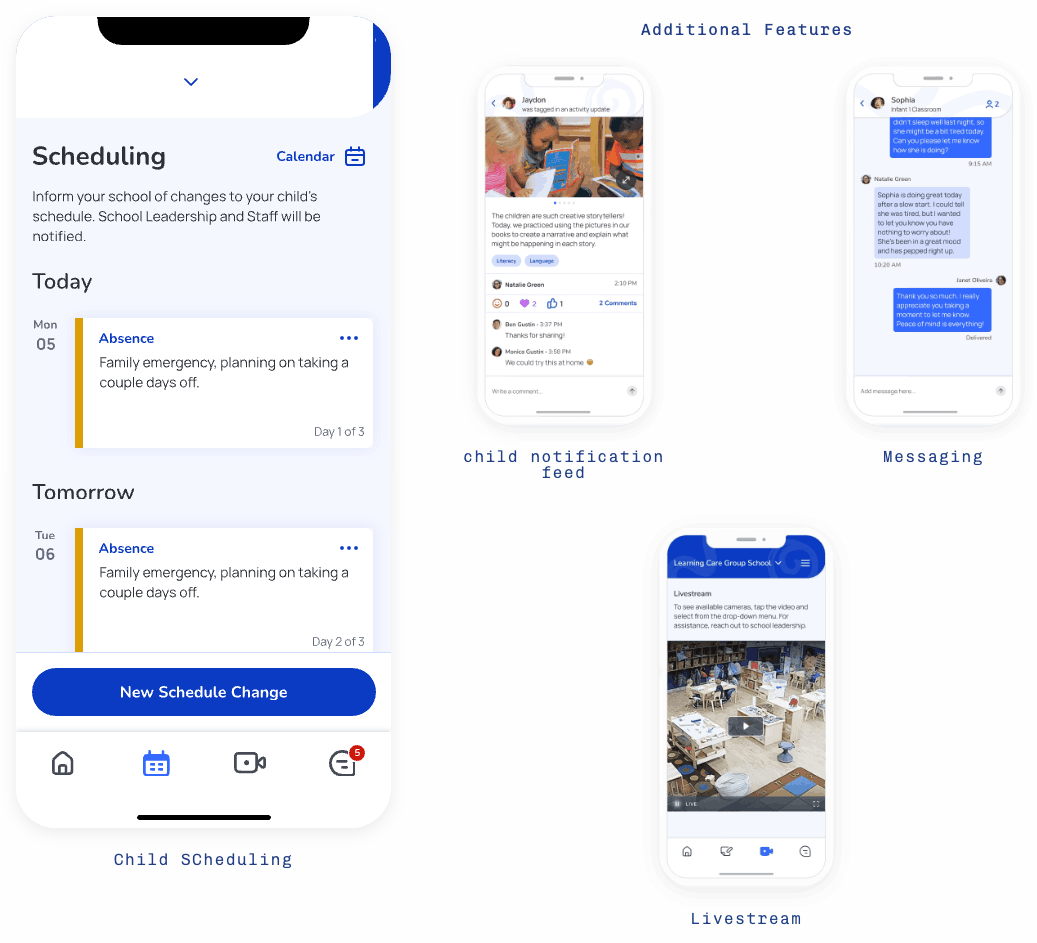
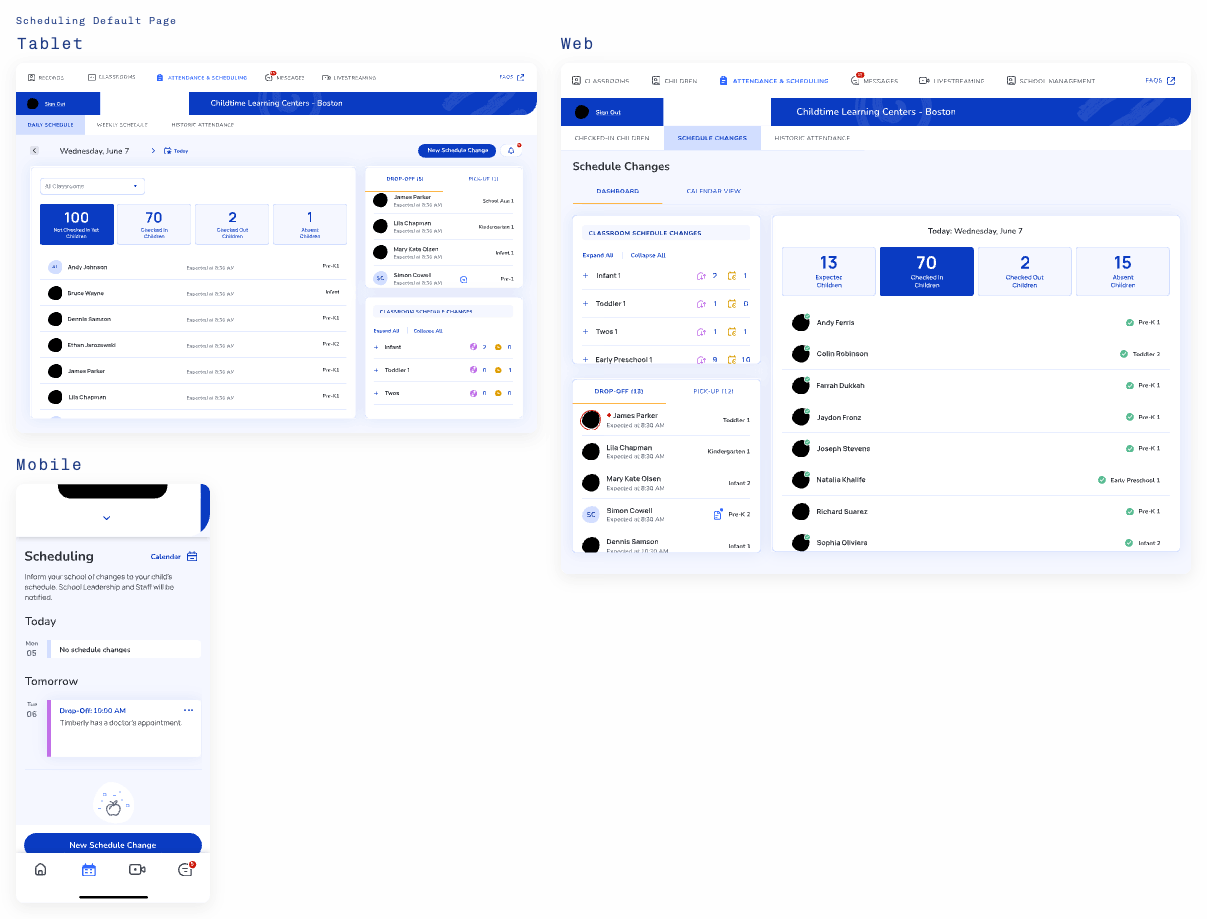
A flexible, real-time scheduling system built for context and role
- Mobile App (Caregivers): Confirm arrivals and update schedules on the go
- Tablet App (Teachers): Track incoming children in real time by room
- Web Portal (Admins): View center-wide schedule and resolve conflicts quickly
- Each user sees only what they need, reducing noise and confusion
Key Features
- Real-time syncing across all devices
- Availability indicators to show caregiver flexibility
- Drag-and-drop time slots for quick schedule adjustments
- Role-based permissions and views
- Designed for clarity, speed, and trust
Designing for Scale
Smart systems decisions for speed and consistency, reducing friction for both users and designers
- Reused existing components to move fast
- Added only essential new patterns (e.g. availability badges)
- Clarified what belonged in the system vs. one-off designs
- Helped the team scale without adding complexity
Working Around Constraints
Shipped fast despite limited engineering access
- Partnered with an engineer from within our own consulting agency for additional support
- Used async tools: Figma, Miro, DoveTail, structured specs
- Prioritized designs that were dev-friendly from the start
- Adaptable workflows kept us moving and ensured a smooth handoff.
Results & Impact
Quantitative outcomes from client feedback and internal metrics
- 25% reduction in scheduling errors
- 20–30% time savings for staff and caregivers
- 40% increase in caregiver satisfaction
- Strong adoption across mobile, tablet, and web
Why It Worked
- Focused on real user pain points
- Built on top of an evolving design system
- Designed for clarity, not complexity
What I learned
Designing for trust means creating clarity at every step, especially in high-stakes, time-sensitive environments.
- Real-time feedback gives users confidence and peace of mind
- Small UX touches (like clear status updates) can have a big impact
- Thoughtful design reduces cognitive load, not just clicks
I especially enjoyed the challenge of designing across devices. Each platform, mobile, tablet, and web, had distinct user needs, and ensuring each experience felt intuitive and role-appropriate pushed me to think deeply about hierarchy, context, and clarity.
One constraint was limited access to the client’s development team. While this created some challenges during implementation, we adapted by collaborating closely with an agency engineer, documenting designs clearly, and anticipating technical considerations early. It reinforced the importance of flexibility and proactive communication in cross-functional work.